FIBRAs: What U.S. Allocators Miss Most

What changed: More allocators are treating FIBRAs less like “Mexico REITs” and more like distinct vehicles where governance, liquidity, and sector exposure drive the real risk premium. Why it matters to allocators: What to watch next: Questions for an IC / allocator call: Educational content only. Not investment, legal, or tax advice. Sources consulted: GCM […]
Nearshoring: Underwrite the Corridor, not the Headline

What changed: The nearshoring conversation has shifted from “is it happening?” to “where can projects actually be delivered given power, water, and permitting constraints?” Why it matters to allocators: What to watch next: Questions for an IC / allocator call: GCM Intelligence is sponsored by Global Capital Mobility, Inc. and GCM Fund Management. All content […]
Structural Resilience in a Fragmenting Global Economy

Mexico’s macro stability is increasingly evaluated against a backdrop of global fragmentation. Trade realignment, demographic divergence, and fiscal pressures are reshaping economic relationships. Within this context, Mexico’s institutional continuity and diversified economic base contribute to structural resilience. Resilience is not defined by immunity to shocks, but by the capacity to absorb and adjust. Mexico’s combination […]
Urbanization, Productivity, and Asset Utilization

Mexico’s ongoing urbanization reflects productivity shifts rather than population growth alone. As economic activity concentrates in urban and peri-urban areas, demand for housing, transportation, and commercial space evolves in measurable ways. This process supports macro stability through efficiency gains and diversified employment. Urbanization influences real asset utilization by increasing density and improving infrastructure efficiency. Assets […]
Monetary Credibility and Capital Formation

Monetary credibility underpins Mexico’s capacity for sustained capital formation. Consistent policy signals reduce uncertainty around interest rates, currency management, and inflation expectations. This environment supports investment decisions that extend beyond short-term horizons. Capital formation is particularly relevant for real assets, where financing structures and return profiles depend on stability over time. Mexico’s monetary framework has […]
Fiscal Discipline and Real Asset Confidence

Fiscal discipline is a foundational element of Mexico’s macro stability. Conservative debt management and measured public spending have limited systemic risk, even during periods of global stress. This approach has reinforced confidence among domestic and international investors evaluating long-term exposure. For real assets, fiscal credibility influences infrastructure investment, municipal finance, and public-private coordination. Stable public […]
Structural Resilience in a Fragmenting Global Economy
Mexico’s macro stability is increasingly evaluated against a backdrop of global fragmentation. Trade realignment, demographic divergence, and fiscal pressures are reshaping economic relationships. Within this context, Mexico’s institutional continuity and diversified economic base contribute to structural resilience. Resilience is not defined by immunity to shocks, but by the capacity to absorb and adjust. Mexico’s combination […]
Mexico’s Inflation Framework as a Stabilizing Force
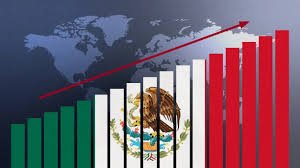
Mexico’s recent macro performance highlights the importance of institutional inflation discipline as a stabilizing force within a diversified allocation. Unlike many emerging markets that rely on episodic controls, Mexico operates under a transparent inflation-targeting framework administered by an independent central bank. This structure anchors expectations across households, businesses, and capital markets, reducing volatility in long-duration […]
Institutional Investors Reassess Exposure to Regulated Vehicles

Institutional allocators are reassessing exposure to FIBRAs, CKDs, and CERPIs as governance standards improve. While structuring costs remain high, these vehicles offer scale and regulatory clarity. Why it matters:Institutional participation strengthens capital market depth and stability. Sources:CNBV, BIVA, OECD. GCM Intelligence is sponsored by Global Capital Mobility, Inc. and GCM Fund Management. All content is […]
Secondary Industrial Corridors Outperform Primary Hubs

As costs rise in core industrial hubs, secondary corridors within 60–120 minutes of major metros are attracting tenants and investors. These locations offer yield premiums with manageable execution risk. Why it matters:Second-ring markets provide diversification and improved risk-adjusted returns. Sources:CBRE Mexico, Colliers, INEGI. GCM Intelligence is sponsored by Global Capital Mobility, Inc. and GCM Fund […]